Everest Base Camp Trek: 12-Day Ultimate Guide, Amazing Tips, Cost & Itinerary
Introduction
The Everest Base Camp Trek is one of the most famous trekking adventures in the world. Located in the Khumbu region of Nepal, the trek takes adventurers through spectacular Himalayan landscapes, traditional Sherpa villages, Buddhist monasteries, suspension bridges, glaciers, and some of the world’s highest mountains.
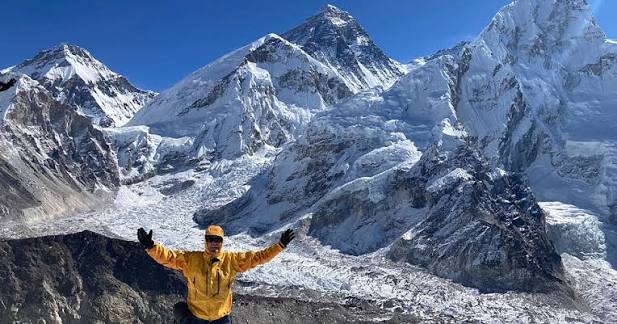
Although reaching Everest Base Camp does not involve climbing Mount Everest itself, the journey provides an opportunity to experience the Himalayan environment at high altitude and stand at the base camp used by mountaineering expeditions attempting to climb Mount Everest.
Mount Everest, known as Sagarmatha in Nepali and Chomolungma in Tibetan, rises to 8,848.86 meters (29,031.7 feet) above sea level. Everest Base Camp on the Nepal side is located at approximately 5,364 meters, although the exact elevation can vary depending on the location and measurement used.
The Nepal Tourism Board describes Everest Base Camp as one of the country’s classic and most popular trekking destinations.
Everest Base Camp Trek at a Glance
| Category | Details |
| Location | Khumbu, Nepal |
| Region | Everest Region |
| Starting Point | Lukla |
| Destination | Everest Base Camp |
| Base Camp Elevation | Approximately 5,364 m |
| Mount Everest Elevation | 8,848.86 m |
| Highest Point | Kala Patthar, about 5,545 m |
| Trek Duration | Usually 12–16 days |
| Difficulty | Moderate to challenging |
| Best Seasons | Spring and autumn |
| Accommodation | Tea houses and lodges |
| Main Ethnic Community | Sherpa |
| National Park | Sagarmatha National Park |
| Major River | Dudh Koshi |
| Major Viewpoints | Kala Patthar, Everest View Hotel |
| Main Attraction | Everest Base Camp and Himalayan scenery |
Why Is the Everest Base Camp Trek So Popular?
Where Is Everest Base Camp?
Everest Base Camp is located in the Khumbu region of northeastern Nepal, inside Sagarmatha National Park. The region is famous for its dramatic Himalayan landscape, including glaciers, deep valleys, high mountain passes, and peaks above 8,000 meters.
The trekking route generally begins at Lukla, which lies at approximately 2,850 meters. From Lukla, trekkers follow the Dudh Koshi River valley toward Namche Bazaar and gradually gain altitude as they move deeper into the Himalayas.
Sagarmatha National Park is also an important part of the experience. The park is home to Himalayan wildlife and vegetation ranging from pine and hemlock forests at lower elevations to fir, birch, rhododendron, and juniper at higher elevations.
Everest Base Camp Trek Itinerary
Day 1: Kathmandu to Lukla – Phakding
Fly from Kathmandu to Lukla and begin the trek through beautiful mountain trails to Phakding.
Day 2: Phakding to Namche Bazaar
Walk along the Dudh Koshi River, cross suspension bridges, and enter Sagarmatha National Park before reaching Namche Bazaar.
Day 3: Acclimatization at Namche Bazaar
Take a rest day and explore Namche Bazaar or hike to the Everest View Hotel for spectacular mountain views.
Day 4: Namche Bazaar to Tengboche
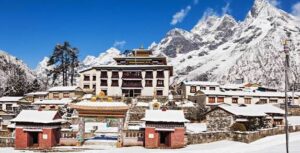
Trek through scenic forests and mountain trails to Tengboche, home to the famous Tengboche Monastery..
Day 5: Tengboche to Dingboche
Continue through Pangboche and the Imja Valley toward Dingboche, surrounded by impressive Himalayan peaks.
Day 6: Acclimatization at Dingboche
Rest and take a short hike to a nearby viewpoint to help your body adjust to the increasing altitude.
Day 7: Dingboche to Lobuche
Trek through the high-altitude landscape toward Lobuche, passing memorials dedicated to climbers.
Day 8: Lobuche to Everest Base Camp – Gorak Shep
Reach Gorak Shep and continue toward Everest Base Camp. Enjoy the incredible views of the Khumbu Glacier and surrounding mountains before returning to Gorak Shep.
Day 9: Gorak Shep to Kala Patthar – Pheriche
Early morning hike to Kala Patthar for breathtaking views of Mount Everest, then descend toward Pheriche.
Day 10: Pheriche to Namche Bazaar
Descend through the Khumbu Valley, enjoying the changing landscapes as you return to Namche Bazaar.
Day 11: Namche Bazaar to Lukla
Complete the final trekking section back to Lukla through forests, villages, and suspension bridges.
Day 12: Lukla to Kathmandu
Take a scenic flight from Lukla back to Kathmandu, marking the end of your Everest Base Camp adventure.
Everest Base Camp Trek Permits
Trekkers need the required permits and documentation for the route. The Everest Base Camp Trek falls under the current TIMS requirements listed by the Nepal Tourism Board. The Board states that Everest Base Camp trekkers must be accompanied by a licensed trekking guide and carry a trekking-agency-issued TIMS card under the revised provisions effective from March 31, 2023.
Trekkers also need the relevant Sagarmatha National Park entry permit. The Nepal Tourism Board currently lists the Sagarmatha National Park entry fee as NPR 3,000 for foreign visitors, with different rates for Nepali and SAARC nationals. Because government fees can change, travelers should verify the current rates before departure.
Accommodation on the Everest Base Camp Trek
Tea houses and lodges are the most common accommodation options. A typical tea house usually provides:
- Private or shared rooms
- Beds and mattresses
- Blankets
- Shared bathrooms
- Dining area
- Hot meals
- Tea and coffee
- Charging facilities in many locations
Major Attractions on the Everest Base Camp Trek
- Namche Bazaar
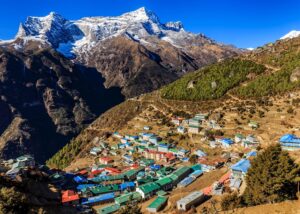
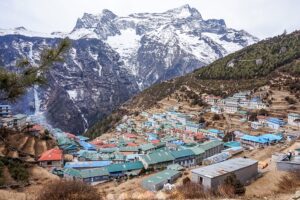
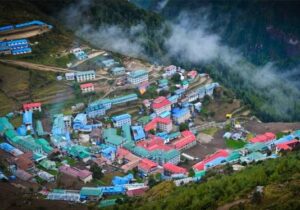
Namche is one of the most famous settlements in the Everest region. It is an important trading and acclimatization center. - Tengboche Monastery
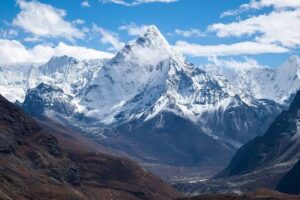
One of the most famous Buddhist monasteries in the Khumbu region, surrounded by spectacular Himalayan scenery. - Ama Dablam
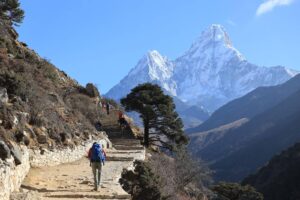
Ama Dablam is one of the most recognizable mountains visible along the route. Its distinctive shape makes it a favorite subject for photographers. - Khumbu Glacier
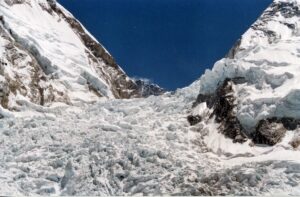
The Khumbu Glacier is one of the most impressive glacial features of the Everest region. - Everest Base Camp
The ultimate destination of the classic trek. - Kala Patthar
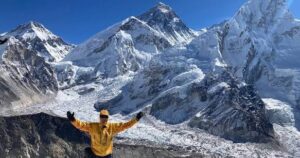
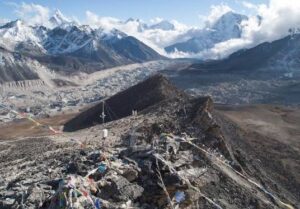
One of the best viewpoints for panoramic views of Mount Everest and surrounding peaks.
Best Time — Season Comparison
Food You Can Enjoy During Everest Base Camp Trek
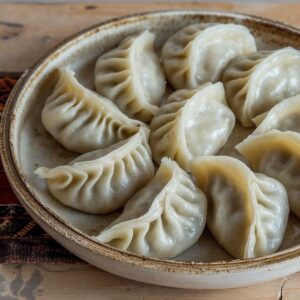
Trekking at high altitude requires enough energy, and the tea houses along the Everest Base Camp route offer a variety of nutritious and comforting meals. From traditional Nepali Dal Bhat to warm Sherpa Stew, these foods help trekkers stay energized throughout the journey.





Conclusion
The Everest Base Camp Trek is much more than a journey to the foot of the world’s highest mountain. It is an adventure through some of Nepal’s most spectacular landscapes and culturally rich Himalayan communities.
From the first steps in Lukla to the bustling trails around Namche Bazaar, the peaceful surroundings of Tengboche, the high-altitude landscapes of Dingboche and Lobuche, and finally the dramatic environment around Everest Base Camp, every section of the trek offers something different.
For many trekkers, the highlight is not simply seeing Everest. It is the feeling of gradually progressing through an extraordinary landscape, overcoming physical challenges, meeting people along the trail, and finally standing beneath the world’s highest peaks.
With proper preparation, gradual acclimatization, appropriate equipment, and responsible trekking practices, the Everest Base Camp Trek can become one of the most memorable journeys of a lifetime.